
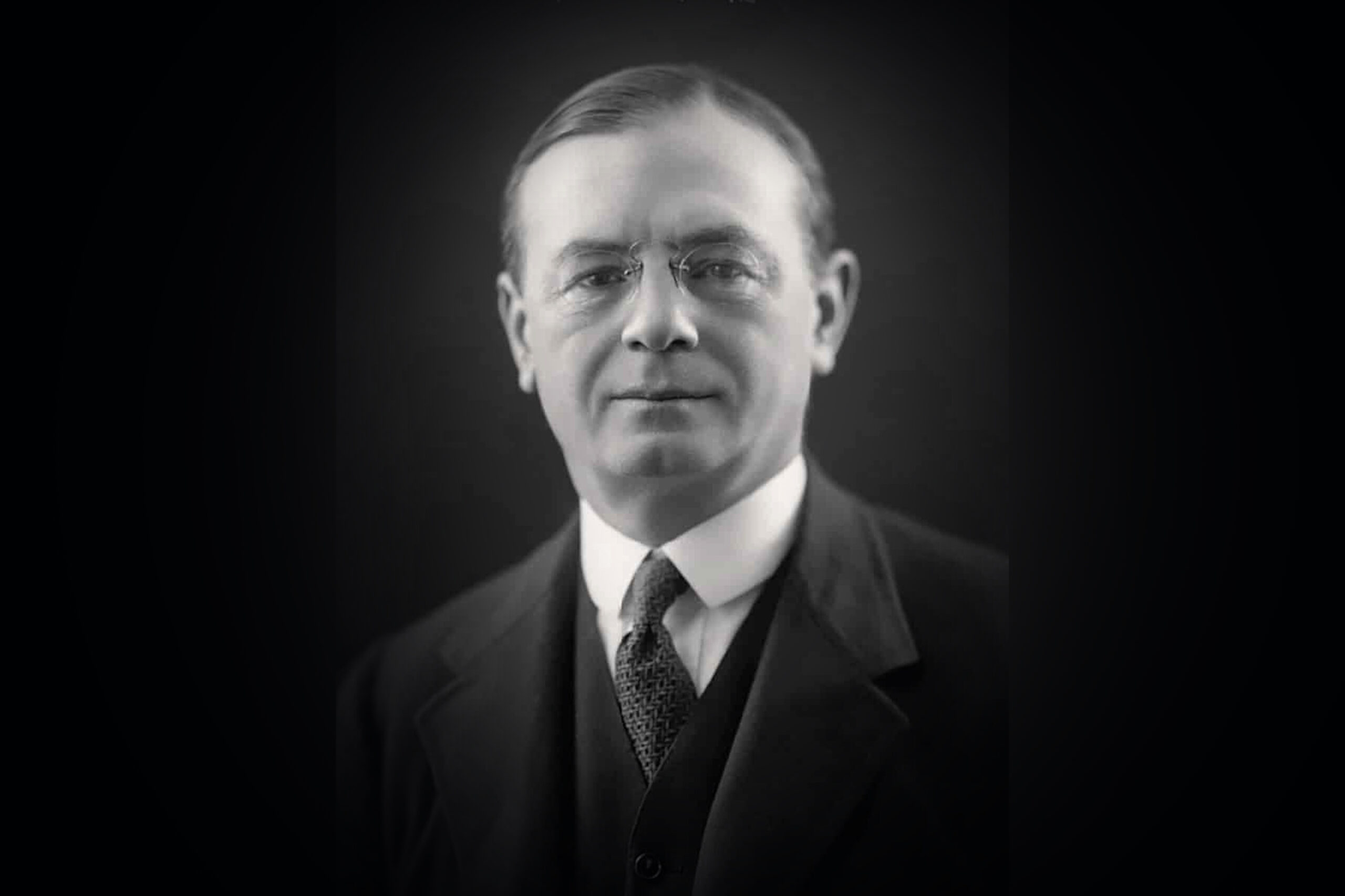
Victor Davis Hanson American Greatness Britain slept in the 1930s as an inevitable war with Hitler loomed. A lonely Winston Churchill had only a few courageous partners to oppose the appeasement and incompetence of his conservative colleague Prime Minister Neville Chamberlain. One of the most stalwart truth-tellers was a now little remembered politico and public… Continue reading Who Will Say No More to the Current Madness?
D-Day at 70

Remembering the most brilliantly conducted invasion in military history by Victor Davis Hanson // National Review Online General Eisenhower speaks with paratroopers prior to the invasion. (Photo via Library of Congress) Seventy years ago this June 6, the Americans, British, and Canadians stormed the beaches of Normandy in the largest amphibious invasion of Europe since… Continue reading D-Day at 70
America’s New Anti-Strategy
Our allies and our enemies have seriously recalculated where the U.S. stands. by Victor Davis Hanson // National Review Online It was not difficult to define American geopolitical strategy over the seven decades following World War II — at least until 2009. It was largely bipartisan advocacy, most ambitiously, for nations to have the freedom of… Continue reading America’s New Anti-Strategy
Loud + Weak = War
China and Russia are no more impressed with empty bluster today than Japan was in 1941. by Victor Davis Hanson // National Review Online The Roosevelt administration once talked loudly of pivoting to Asia to thwart a rising Japan. As a token of its seriousness, in May 1940 it moved the home port of the Seventh… Continue reading Loud + Weak = War
The Hitler Model
Why do weak nations like Russia provoke stronger ones like the United States? by Victor Davis Hanson // Defining Ideas An ascendant Vladimir Putin is dismantling the Ukraine and absorbing its eastern territory in the Crimea. President Obama is fighting back against critics that his administration serially projected weakness, and thereby lost the ability to deter… Continue reading The Hitler Model
The Chihuahua Theory of Foreign Policy
by Victor Davis Hanson // NRO’s The Corner The new administration party line is that Putin is now weak and acting out of just that weakness by sending troops into Ukrainian territory — a sort of chihuahua who took on a pit bull because he knew he was weak. But even weak states do not typically… Continue reading The Chihuahua Theory of Foreign Policy
Is China copying the old imperial Japan
Ignoring History: The Folly of Our Iran Pact
Dictatorships abandon treaties when they become inconvenient. by Victor Davis Hanson // National Review Online According to our recently proposed treaty with the Iranian government, Iran keeps much of its nuclear program while agreeing to slow its path to weapons-grade enrichment. The Iranians also get crippling economic sanctions lifted. Share This
Obama’s Munich
by Bruce S. Thornton // FrontPage Magazine The interim agreement negotiated by the Security Council and Germany with Iran is a serious advance toward what Winston Churchill called the Munich agreement: “a total and unmitigated defeat” and a “disaster of the first magnitude.” Nothing in the agreement guarantees that Iran will fulfill its promises, or that inspectors will be allowed… Continue reading Obama’s Munich
Why Should We Study War?
Military history tells the story of human nature at its great heights and terrible lows. by Bruce S. Thornton // Defining Ideas In the latter years of World War I, Winston Churchill met with the novelist and poet Siegfried Sassoon. Sassoon was a winner of the Military Cross––he single-handedly routed 60 Germans and captured a trench… Continue reading Why Should We Study War?