Victor Davis Hanson
American Greatness
No one ever quite knows the nature of the aftermath of any war in the Middle East.
The current effort to disarm and neuter the Iranian theocracy is no exception.
But contrary to European and American left-wing consensus, the ripples of the Iran war are already remaking the postwar world as we knew it—and in ways that are all bad.
For more than half a century, OPEC has terrorized the industrial world with threats of oil shortages and sky-high prices, with members often agreeing to cut back to 70–80 percent of their capacities.
But recently, the hard-pressed United Arab Emirates announced—at a time of high oil prices—that it was leaving the cartel and freelancing. The UAE will likely increase its production by 1–2 million barrels per day. Once such a key member departs, it is probable that other oil-exporting nations will defect to take advantage of the current spike in oil prices to avoid missing out on profits as others get richer.
OPEC is no longer the powerhouse monopoly of the 1970s. It now accounts for barely half of the world’s exported oil. Meanwhile, the US, the largest producer of oil and gas in history, is pushing hard to increase daily production to meet increased demand for American oil. A rebooted Venezuela has already reached a seven-year high in its renewed output and promises even faster escalation in oil exports.
Russia’s still-sanctioned oil has suddenly started to appear on the world market, as the Kremlin has upped exports by a quarter-million barrels per day.
Add it all up, and Iran’s 1.5–2 million barrels may not be all that missed, as the world price may fall by summer—regardless of Iran’s status.
The combination of a neutered Iran and its foolish targeting of the Gulf nations is also redefining the Middle East.
It is odd for Arab nations to urge the US to continue its bombing of another Middle Eastern nation. But the Arab nations of the Gulf Cooperation Council (Bahrain, Kuwait, Oman, Qatar, Saudi Arabia, and the United Arab Emirates) are frantically asking America to end the nearby Iranian theocracy for good.
The Gulf states were hit by six times as many Iranian rockets and drones as Israel. And by itself, the Jewish state poses no regional threat to the Persian Gulf exporters.
The result is a more realistic, less ideological Gulf council that is beginning to accept the fact that in the Middle East, Israel alone has the combat aircraft, expertise, and experience to strike Iran and deter it from attacking moderate Arab governments. This raises the specter of a new de facto alliance of mutual advantage between Israel and much of the Arab world, one that would isolate Iran, along with Hezbollah, Hamas, and the Houthis. If the previous catalyst for the Abraham Accords détente was American pressure, it may soon become Arab self-interest.
As for Iran’s three terrorist cabals, cash is in short supply. Will it be feasible for a postwar Iran, even if the regime survives in some form, to spend billions of dollars subsidizing terrorists that increasingly have little support in the Arab world?
Will a destitute Iran be able to replace its half-century-long, half-trillion-dollar investment in its military-industrial complex, now in ruins?
OPEC seems not to be the only loser in the brief two-month war. Having previously lost its Syrian proxy, Russia is now effectively cut off from the Middle East with the loss of its client Iran, a separation that could become permanent should the theocracy fall.
Moscow is still trapped in a four-year quagmire in Ukraine, with dead and wounded approaching two million and an economy on the brink of depression.
Putin’s worries are myriad. His nation is the largest in the world in terms of landmass, but the population has shrunk from the USSR’s high of 290 million to scarcely 145 million people—an aging and declining demographic.
Large countries with abundant natural resources and relatively small, diminishing populations naturally draw the attention of a nearby rapacious China, making Putin more inclined to seek détente with the West.
China itself, under American pressure in Panama and having lost much of its influence with oil-rich Venezuela, is scrambling in vain to find new oil producers desperate to unload their sanctioned oil at a discount to the Chinese. Beijing is as dependent on foreign sources of energy as the US is self-sufficient.
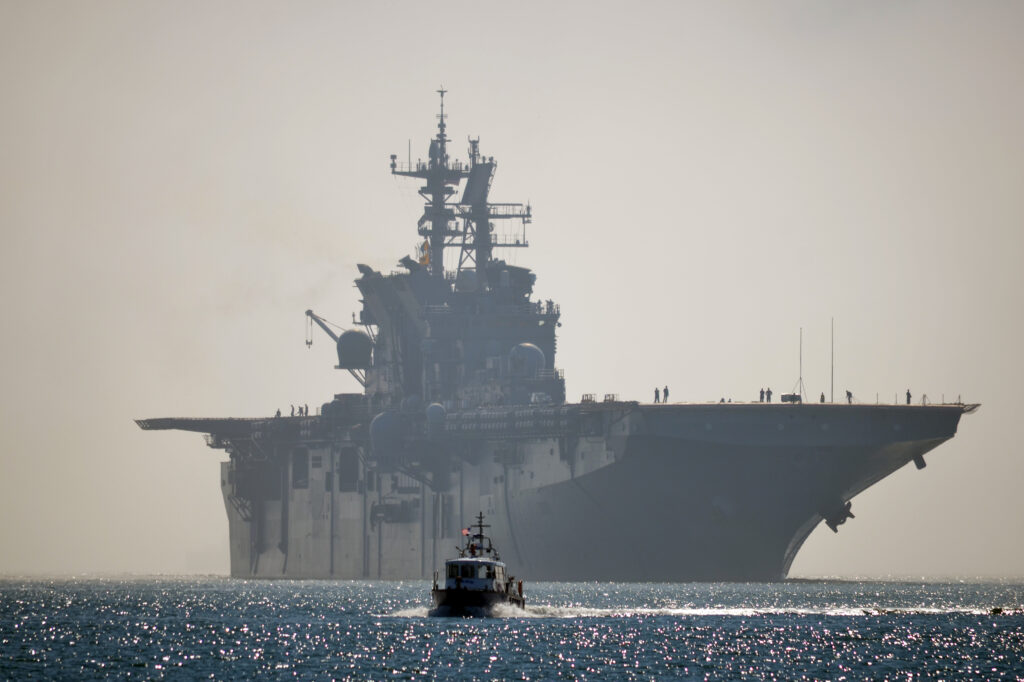
Beijing continues to eye Taiwan as always, but it is now disturbed by the display of high-tech American naval and aerial prowess, just as it has been disappointed by the inability of the Russian army to overrun a much smaller and less well-armed Ukraine.
As a result, China may be absorbing these lessons and rethinking the viability of sending an amphibious fleet across some 110 miles of open sea and then landing hundreds of thousands of People’s Liberation Army soldiers on the beaches of Taiwan—amid skies full of drones and missiles and a sea of maritime drone ships and submarines.
Europe was also a big loser from the war. The temporary closing of the Strait of Hormuz reminded the oil-dependent European Union that its radical green agenda was unsustainable. The continent retains a desperate need to find safe and reliable exporters of affordable fossil fuels.
Many NATO members—Spain, France, Italy, and the United Kingdom in particular—will regret their loud opposition to allowing the US to stealthily use their airspace and joint NATO bases.
True, the Europeans despise Trump. But they still may need the US military to protect them from Russia, any potential anti-Western nuclear power with ballistic missiles, and regional destabilizers like Milosevic-era Serbia.
Of course, most European hearts wanted to restrain or even weaken the now Trump-led Americans. But their heads told them that the American-guided demise of the Iranian theocracy meant fewer existential threats to Europe from the Middle East, fewer violent Arab clients and proxies in the region, and fewer subsidized terrorists in their own backyards.
So the European nations could have kept quiet about allowing the US to use their airspace and basing under NATO privileges, without endangering their opportunistic nonparticipation in the war. They could have shown “concern” without stooping to loud “This is not our war” cheap attacks on the US—and thereby kept the NATO partnership strong. Germany, in this regard, was particularly tone-deaf in its arrogance.
In the end, apparently, many Western European NATO members were more scared of Iranian reprisals, their radical political parties, and internal Islamic terrorists than of losing their cherished special relationship with America.
Moreover, the Arab world is relearning that Britain and France talk a great game but, when words must be followed by action, are often nowhere to be seen.
Where have been the long-promised Anglo-French-led European armadas of blockade breakers in the Strait of Hormuz? Where are the Europeans to protect their Gulf oil suppliers from Iranian attacks? Where is the French help for its former colony, Lebanon, in its hour of need, as it stands up to Hezbollah?
Despite Trump’s threats, NATO will survive, at least in name.
But in reality, American attention will shift eastward to those European members who believe in strong defense, deterrence, Western exceptionalism, and the unquestioned value of American support. It is likely that any future unilateral European expedition—like the 1982 British armada sent to the Falklands or the long French intervention in Chad, or even the unofficial and ad hoc French- and British-inspired NATO “coalitions of the willing” sent to bomb Serbia in 1999 and Libya in 2011—will no longer find American support.
Add it all up, and we see that Iran, which all nations in the region once feared, is now isolated, despised, and weak—likely never again to become the terror of the Middle East.
Israel may well become normalized in the region, largely because of its indomitable military and its high-tech, dynamic economy that poses no threat to the moderate Arab world but offers them lots of advantages.
China’s Belt and Road strategy has hit a wall in the Middle East and the Western Hemisphere. It can no longer slake its thirst for the cheap, sanctioned oil of tyrants.
Russia is more vulnerable than at any time in its long history and more focused on defending its borders than deploying abroad.
For years, European nations have been warned that disarmament, unsustainable cradle-to-grave socialist entitlements, open borders, declining fertility, radical green policies, rising populations of often-illegal aliens from the radical Middle East, and cheap anti-Americanism were a prescription for civilizational decline. The Iran war confirmed all those warnings and revealed Europe as even more listless and impotent than its friends had feared.
For all the global abuse and cheap left-wing attacks, America is emerging from the war perhaps stronger than at any point since the postwar era.
VDH like his Trump is regurgitating Putin lies regarding Russia’s genocidal war against Ukraine. Victor claims that Russia is “more focused on defending its borders than deploying abroad.” Ukraine IS Russia’s abroad!(no matter what are Trump’s & Hanson’s delusions). Doesn’t Hanson realize that EVERYONE except Trump and Professor Hanson know that Russia attacked Ukraine demanding annexation of its borders? Trump still insists that Ukraine surrender its borders to suit Russia’s demands (to Hell with American promises regarding the Budapest Memorandum)! Does Hanson agree with that? The answer to that tells us all we need to know about Professor Hanson.
Superb!
I want to thank you for your appearance on Piers Morgan’s Uncensored podcast.
I can’t imagine that I could remain that composed.
I find Professor Roy Casagranda very likable and his presentations amusing but often rather biased and occasionally almost anti-self governance.
My curiosity of what a discussion between you both would be like has been at least partially satisfied.
Deepest regards from a fellow citizen,
Rich McMahon
Thank you Victor Davis Hanson for your analysis and always brilliant insight.
However, one key question about your characterizing Iran as ‘likely never again to become the terror of the Middle East’?
Unless productive regime change really does happen, what about 10 – 20 years from now, as Russia and China (and possibly other U.S. enemies) assist Iran in rebuilding capacity for a generally malicious intent? What might this U.S. generation’s children or grandchildren face?
JLynn,
Putin wanted to seize the agricultural, mining, heavy equipment & other manufacturing industries in Eastern Ukraine for his oligarch buddies & self. He purportedly owns a one-third interest in these post-Soviet, privatized industries and is believed to be one of the wealthiest individuals in the world today.
Jaroslav is right when he says Putin’s a goner, if he loses this costly war in Ukraine; the truth will be known by the Russian people who will turn against him & his oligarchs with their offshore bank accounts, assets & lavish life styles.
Interestingly, since the Ukraine war is destroying the Russian economy, Putin mandated that these oligarchs redomicile their companies in Russia, where he begins to seize their assets to subsidize his wartime economy.
One never quite knows the nature of the longterm aftermath of any war in the Middle East,
but most anyone except CheneyBush and TrumpHegseth knew the immediate result would be stratospheric oil prices and terroristic attacks against America’s fair-weather allies nearby.
For months, if not years, we quietly heard that the Arab nations wanted Israel and the USA to take down the Iranian regime and ensure it did not get nuke capability. While they could not say the same outright, having a nuclear armed Iran might start a nuclear arms race in the middle east.
Now that Trump has taken action, we are seeing how that quiet noise is being heard much louder across the middle east with our Arab partners fighting back in response to Iran’s attacks. The disolution of OPEC may be an unintended bonus as getting better prices for Arab oil just makes sense.
That the Russian population has nearly halved since the Soviet Union days, one must wonder why Putin didn’t just offer to relocate all those Russians who wanted to be ‘Russian’? He would have nearly 2 million more soldiers alive plus another million or more Russian citizens at the expense of Ukraine.
Jaroslav,
Has it occurred to you that Trump might be acting in the best interests of the United States? We’ve already given 200 bilion or so to Ukraine and continue to send millions in aid without Ukraine being a NATO member, when it’s really a European problem. Trump likely wants whoever ends up in control of Ukraine to honor that rare earth minerals mining deal to recoup some of our investment in Ukraine’s self-defense, and he definitely wants to separate Russia from China which is our main adversary.
We also have mid-term elections coming up, and energy costs are a major factor for average Americans & economy in general, hence allowing Russia to temporarily sell its oil in the world marketplace.
Lastly, our military is too thinly stretched between Latin America, Europe, Middle East & Far East. Do we need any more conflicts driving us further into debt? Do we need any more conflicts to potentially disrupt our own economy? Perhaps, Trump believes he can convince Putin to avoid invading the Baltics by cutting him some slack at this moment, when his country is purportedly on the verge of economic collapse.
Otherwise, I agree with you about Putin’s war aims & fate, if he loses this war in Ukraine. He’s one of the most ruthless & corrupt people in the world, but isn’t that ultimately a Russian problem?
Thank you VDH! Please keep pushing … for all to hear your words. We need the left controlled media, and lunatics to listen and hear the facts!
“In ways that are all bad”… for the left.
I am stunned that VDH would write that “Russia’s oil is still sanctioned.”
The US paused sanctions through temporary waivers that allow certain Russian oil shipments to proceed. They first paused enforcement of Russian oil sanctions in mid March 2026, and then extended that pause twice — first to April 11, then to May 16, 2026, and Trump will probably extend these sanctions for the third time or even indefinitely.
In effect, Trump’s appalling move allows Russia — on the verge of economic collapse — to continue bombing Ukrainian cities, schools, and maternity wards. And only yesterday there was a massive drone attack on Ukraine’s energy infrastructure, resulting in power outages in several regions, including Donetsk, Mykolaiv, Zaporizhzhia, Sumy, Kharkiv, Rivne, and Cherkasy.
I am even more astonished by your statement that “such a move will make Putin more inclined to seek détente with the West.” You are either oblivious to Putin’s war aims or living on another planet. Such a statement coming from America’s leading historian is incomprehensible and shocking. Putin will not stop killing Ukrainians until he reaches his goal of eliminating Ukraine . . . because if he stops, he is dead; the Russian people will crucify him, and he knows it.
I agree with the First 5 Thoughts posted above including Mr. Gehrig’s. In addition, I still believe that a battalion or so of US Marines augmented with IDF Troops and a few A-10 Warthogs could assist the Iranian population retake their country. It is not necessary to start in Tehran, but starting in other areas, letting a groundswell of opposition to the theoracy grow all throughout the nation. After all, the Iranian population conducted a massive revolt against the Shah back in 1979. Unfortunately they made a bad choice for leadership at that time. I trust that has been a lesson well learned.
Agree with D.E. Gehrig. End of Paragraph 3 clear contains a typo.
Victor, I listen to all your podcasts and am happy to subscribe to the Blade of Perseus. Long live VDH.
Not sure why the third sentence ends with the word “bad”, unless you meant bad for the anti-US people in Europe and the US.
I agree with “I think there was an editing oversight in paragraph 3’s ending written as, ‘–and ways that are all bad’” . . . but I reckon maybe it was supposed to/should have been “all bad” for Iran and anti-American Europe
Yes… what Donald G. said.
Thank you; this helps my depression as I wonder how, after a lifetime of watching high school productions of the Diary of Anne Frank and having my kids tell their class the story of Hannukah, the reveal of Jew hatred took so little time. Well, this time Jews have a well armed refuge. I hope you will discuss what can happen to the Middle East populations that, unlike the Israelis, and like the Gazans, the Kurds, maybe some Iranians, are going to have to relocate.
“Europe was also a big loser from the war. The temporary closing of the Strait of Hormuz reminded the oil-dependent European Union that its radical green agenda was unsustainable. The continent retains a desperate need to find safe and reliable exporters of affordable fossil fuels.” This paragraph needs some clarification: It does not need to import fuels. The North Sea is a huge oil bearing strata, untapped by Europe because of the “green” ideology. Britain has a major ability to frack. Fracking has been banned. So their people pay huge sums for imported oil and LNG shipments from the US. Natural gas and oil sources are literally held in an ocean under their feet. The source of much our history and philosophy has become a shelf of stupidity and ideological policies, ignoring the fact that they can pull themselves out of their mess.
Victor, can you explain the perspective of some academics [Sachs & Mearsheimer – Col McGregor] who are adamant that Iran was not building a nuke and that it will win this conflict? Also that Trump is somehow motivated by evil rather than a desire to make the world safer? Catherine Fitts indicates that she thinks this is about pursuing a digital currency and Iran refuses to comply. Any light on these issues is appreciated.
Ditto to Donald E. Gehrig.
Ultimately, the U.S. will likely seize Kharg Island & a few other islands along the coast to gain control of Iran’s oil & petrohemical revenues fueling its insane terrorist threat to everyone in the region & beyond. With Venezuela, Trump has proven it’s not necessary to occupy a country to defeat it or eliminate a national security threat. Jihadist radicals will be dealt with over time.
The specific problems of Russia, China & Europe, both internally & externally, will be sorted out over time. It’ll be interesting to see how those issues are resolved, while the U.S. continues to address its own problems head-on under this Trump administration. We live in historic times with the rebalancing of relationships in this new world order.
Persians aren’t arabs. Arabs aren’t Persians. They have never got along. How long did it it take the big brains to acknowledge that communism wasn’t monolithic? Maybe the same is true for Islam?
Did you mean to say in the third sentence….”in ways that are NOT all bad”. The word NOT maybe is a typo. That would be more consistent with the great arguments you lay out in the article.
Good catch, Mr. Gehrig. Great article by the great VDH.
Significant cognitive dissonance among many of Irans leaders. Imagine thinking you have the ultimate silver bullet in your hip pocket (SOH) only to have the mythical flying carpet pulled out from under. The only path to hegemony was to run sustained delaying actions hoping U.S. mid-term elections would result in disruption or curtailment of U.S. operations and achieve global media buoyancy. In turn leading to, at worst, a status quo negotiated settlement or perhaps even gaining some bizarre victim compensation by reduced or eliminated economic sanctions as achieved during previous U.S. Administrations. As we watch this strategy unravel exponentially one can only hope the spool empties before anymore suffering of the Iranian people.
Victor, I believe there is an error in your text. In paragraph three, you write, “But contrary to European and American left-wing consensus, the ripples of the Iran war are already remaking the postwar world as we knew it—and in ways that are all bad”.
I think you meant to say, “and in ways that are not all bad”.
Am I wrong?
I think there was an editing oversight in paragraph 3’s ending written as, “–and ways that are all bad” was meant to be “–and in ways that are not all bad.”