
Victor Davis Hanson
American Greatness
The prognosis of the Iran War is now so couched in politics and so warped by the American Left that the public has grown tired and wants it all to go away. But in truth, the situation is so fluid that any accurate prediction is impossible. Yet there is good reason to believe in an eventual outcome quite favorable to the U.S. and one far better than the status quo ante bellum.
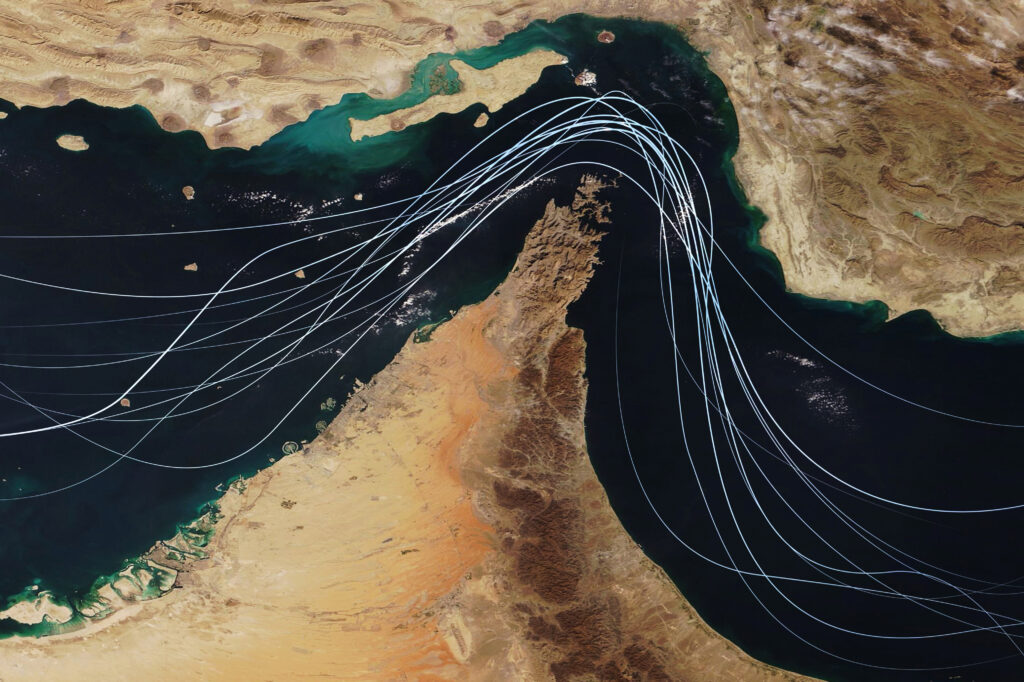
The Strait of Hormuz
Prior to President Trump’s most recent announcement that the United States would first blockade and then reopen and control traffic through the Strait, only a few ships were going through, mostly those aligned with Iran, opposed to the United States, or neutral.
Thus, the Strait was disrupted to a far greater degree than during Iran’s earlier efforts at closure during the “Tanker War” phase of the Iran–Iraq War, as well as its chronic harassment of shipping in 2018–19. And now?
If Trump quickly clears and secures control of the Strait, and if allowable traffic reaches, say, 60–70 percent of prewar levels and if the U.S. avoids a full-scale war, instead responding disproportionately to any renewed Iranian attempts to close it—then, within one to two months, oil prices will begin to taper off.
The American challenge with the war is not military but political. This time, the U.S. is not sending Marines to fight house to house in Fallujah or to scour villages on the ground in Helmand Province—losing hundreds in casualties and fighting in circumstances favorable to jihadists and terrorists.
Instead, the administration is restrained in its use of force only by concerns about the war’s effects on the U.S. economy, global oil prices, domestic gas prices, the midterm elections, and the political fortunes of vulnerable Republican members of Congress.
Militarily, the U.S. has choices. The Navy can continue demining the Strait, rotate patrols of U.S. and allied warships through it, allow allied and neutral shipping to pass while blocking Iranian-bound ships, and periodically strike Iran whenever it attempts to disrupt shipping—including clearing its coasts of missiles and drones. In other words, Trump can flip the Iranian strategy of selective entrance to the Strait, with the key difference that he has the wherewithal to carry out such a calibrated blockade, and Iran does not. World opinion will be with him, for economic reasons and, should Iran seek to stop him, for its breaking the ceasefire and thus justifying the rain of retaliatory bombs that will descend upon it.
Or if Iran restarts missile and drone attacks on U.S. military and allies in the region, the administration can warn Iran that it will lose its oil facilities on Kharg Island as well as dual-use generation plants—until it relents.
But in the long term, no one will forget Iran’s third—and most egregious—effort to hijack the Strait, despite its failure to do so completely and for any sustained period.
The Gulf exporters will double down on their Red Sea and Gulf of Oman pipelines, which bypass the Strait of Hormuz. Saudi Arabia and others will explore more routes, perhaps even through Jordan to Israel and Haifa on the Mediterranean.
In the end, Iran will be left with an inert asset—if not a liability—since the United States can ensure that no oil flows from Kharg Island through the patrolled Strait, which the West may ultimately render irrelevant anyway. Importers will quietly begin shifting toward increased output from Venezuela, the United States, and perhaps a soon-to-be unsanctioned Russia. Iran’s attacks on 11 Muslim nations in the Middle East will not be lost on the people of the region. Many of the sheikdoms will continue to press Israel and the U.S. to ensure Iran does not rearm. A sane Gulf would not give any more money to Hamas, given its hostile and hated lunatic patron.
Regime Change
Iran lost most of its 47-year-old, multibillion-dollar investment in weapons as well as its military-industrial complex.
To rearm will cost the regime dearly—and that vast expense will be unpopular with a restive populace short of food and fuel.
It will be hard for whoever is running the country to reestablish its military arsenals and multibillion-dollar subsidies to Arab terrorists. Indeed, Iran’s subsidized proxies—Hezbollah, Hamas, and the Houthis—may be left orphaned, despised by the Iranian people, and perhaps even more hated by some of their former Gulf co-sponsors. The odd myth of Iranian military invulnerability is shattered. And that loss of face, too, will have consequences soon at home and abroad. The Iranian people will further grow angry that the one nationalist argument made by the Iranian mullahs—that at least its half-century, half-trillion-dollar military buildup sent shivers throughout the Middle East, terrified the West, and gave global cred to Iran—has now also imploded.
It is one thing for the people to be ruled by globally feared autocrats armed to the teeth, but quite another to be governed by humiliated, now-impotent incompetents and buffoons.
Once the Berlin Wall fell, it took weeks and sometimes months for Eastern Europeans to overthrow their communist oppressors. And it required more than two years after the wall went down for its full effects to ripple out and dissolve the Soviet Union. On that basis, then, no one should expect regime change merely days after the cessation of the war.
The West has little real idea who is currently running Iran or who or even what they represent.
All that is known is that second- or third-tier theocrats, military officers, politicos, and the Islamic Revolutionary Guard Corps thugs are vying for power. Each cadre has likely become terrified that it will either be seen as too accommodating and attacked by the hard-liners—or that rivals will defect and cut a deal with the Iranian people to serve as transitional figures, thereby avoiding the noose. The worst of the worst know that if they are not killed by drones or missiles in any renewed hostilities, they may instead be killed by the Iranian people if and when the regime collapses.
Winners and Losers
The eventual beneficiaries and casualties of the war will become clear over the next three or four weeks, hinging on whether the U.S. concludes that those in charge are worthless negotiators who, if Iran persists in attacks, will have to be persuaded by further force.
But on the larger map, the once anti-Western bloc—Russia’s Assad regime in Syria, China’s Iran satellite, and Iran’s own proxies, Hezbollah, Hamas, and the Houthis—is either gone, tottering, humiliated, or increasingly isolated.
Russia’s brief advantage from higher oil prices will end soon. It will remain stuck in a Somme-like quagmire in Ukraine, and its weapons corridor to and from Iran will be hard to restore to prewar levels. If Putin were smart, he would cut a deal with Ukraine, seek relief from sanctions on Russian oil, and then pump like crazy.
China has lost its exclusive oil concessions with Venezuela and may have forfeited a similar sweetheart deal with Iran, now or in the near future. If the regime falls, Beijing will likely be hated by any subsequent transitional government. It may instead seek to come to some arrangement with the U.S. to send its tankers through the Strait—if Iran does not provoke the U.S. and lose Kharg Island.
The display of American air power and the evolving nature of 21st-century tactics and munitions will also likely give China pause regarding Taiwan. The specter of a sea of smart mines, surface and submarine drones, and showers of airborne drones and missiles from Taiwan—combined with an allied fleet similarly equipped—cannot be reassuring to the Chinese.
China would likely face a bloodbath transporting hundreds of thousands of soldiers across 110 miles of open and contested sea. At the acme of French power in 1804–5, Napoleon was still wise enough not to press his luck transporting soldiers across the 26-mile English Channel. Hitler sat atop what is now the entire European Union by late summer 1940, but was also savvy enough not to contest the Royal Navy in the channel.
In sum, Beijing watches the once-feared Russian army mired in death and incompetence in Ukraine. In contrast, the U.S. and Israel, in a matter of days, wiped out the Iranian navy, air force, and most of its missiles and drones. The obvious conclusion is that China will be less likely to press its luck invading Taiwan.
Western Europe is a big loser. Almost all of our old Western European allies embarrassed themselves. For weeks, the U.K. lacked a single ship seaworthy enough to reach its base at Akrotiri, Cyprus, which had been targeted by the Iranians.
Had the U.S. once treated Margaret Thatcher’s 1982 unilateral expeditionary flotilla to the Falklands the way Keir Starmer did the U.S. effort to disarm Iran and prevent its acquisition of long-range nuclear-tipped missiles, the Falklands would still be Argentinian. (One wonders today whether Argentina or Britain is the more open society, the more pro-U.S., and the more stable nation. And who knows whether a single British destroyer could even make it all the way to the islands today?)
France talked tough—but has little intention of sending ships to the Strait or aiding postcolonial Lebanon to free itself from even a weakened Hezbollah. Instead, France only seems energized enough to deny the U.S. access to French airspace.
Spain was even worse. It seemed at times pro-Iranian—downgrading its Israeli embassy while reopening its Iranian one. It sent a message to the U.S. that the shared NATO bases in Spain and its airspace were worthless as far as the U.S. operations were concerned. If this is indeed true, then Spain is insignificant as an ally and has now chosen the status of a hostile neutral.
NATO may remain in name, but at least for the near future, the U.S. will likely ostracize the Spanish, be cooler toward Meloni’s Italy, which refused landing rights in Sicily, be curt with Germany, which talked out of both sides of its mouth, and may more or less consider NATO de facto a largely Eastern European bilateral alliance with the U.S.
At any rate, the next time France wishes logistical and intelligence support for its doomed adventures in postcolonial Africa, or a NATO “coalition of the willing” begs the U.S. to lead a “moral” crusade to bomb the ports and communications of Libya or blow up the bridges and power grid of Belgrade, it will be politically impossible in the U.S. to assent. As for the U.K., let us hope it has no need for anything like another Falklands adventure, because next time the U.S. will likely smile and echo Prime Minister Starmer: “This is not our war . . . we’re not going to get dragged into it!”
The Democrat-media nexus, far more so than was true of the Iraq War, was not so much hysterical as nuts. On Monday following Easter, they damned Trump as a warmongering Nazi criminal; by the next night, he was an appeasing naif, a resurrected Neville Chamberlain for 2026.
The Party’s base was openly rooting for Trump and—by poorly disguised association—the U.S. to fail. As for the midterms, they traditionally hinge on the economy. While it is likely the war has impaired it for months, no one knows what its status in November will be. If there is resolution within two or three weeks, ending with an open Strait, lower oil prices, and an Iran neutered for years, then the public may feel that better times are coming at home and abroad.
Most European and Asian democracies for a half-century have had an unspoken, implicit understanding that they would not overtly alienate Iran or condemn it for its Middle East terrorism, in exchange for free passage through the Strait and exemptions from Iranian terrorist proxies. The residual policy remains. So, despite their greater dependency on Middle East oil than is true of the U.S., they until recently felt they could continue their silent understanding and finesse free passage—rather than assemble an armada of warships, help to blast through the straits, and to clean the northern shore of missiles and drones.
The U.S. can open the Strait rather easily, either by direct means, sending tactical aircraft and drones to patrol the coast, providing air cover for the fleet, demining the waters, and escorting ships through, with the proviso that if Iran attacks, it will take out Kharg Island facilities and then resume the air campaign.
Trump is not yet at that point. Given the hysteria of his political enemies, who smell a takeover of Congress in November, impeachment for Trump, trials for his family members, and the end of the Trump counterrevolution, the stakes are high. To avoid all that, he needs a booming economy based on a steady stock market, lower interest rates, and a return to historically low oil prices—but in the next seven months.
The American people also expect a “win” in Iran, defined now by the inability of Iran to close the straits, to launch missiles at U.S. and allied targets, and the surrender of fissionable nuclear material. Iran feels they can delay, harangue, barter, and passively-aggressively stall until the midterms. So the window on the military solution is closing fast.
Trump might point out that the long-term outlook is not good for Iran. Saudi Arabia will expand its pipeline capacities to the Red Sea. The UAE will do the same and expand its existing pipeline to the Gulf of Oman. There is even some talk of Saudi Arabia building a new massive line across Jordan to the Israeli Mediterranean port of Haifa. These Gulf agendas will eventually make the Strait irrelevant to oil exporters like Iran and flip its advantage to the disadvantage of Iran’s vulnerable dependency on the Strait.
In sum, we should ignore the periodic 24-hour schizophrenia of the Left and the media, and instead examine the reality of the war so far, and what will be its likely long-term effects.

Discussion (16)
Join the conversation. Subscribers get priority commenting access.
Log In to CommentSounds to me like a 'feel good' article for Trump and his right-wing supporters. The writer is either ignorant of Persian Gulf history and its realities on the ground today or just deliberately attempts to boast totally baseless decision by the Trump administration to impose a war of choice on Iran to please the genocidal Israeli regime. Repeating ancient rhetoric such as regime change and economic collapse in Iran reflect a total lack of understanding of Iran's sophistication and its regional influence and connections. I'll just have to respectfully wish this author sweet dreams and warn him that his not so distant wake-up call won't be very pleasing.
And if Iran can't export it's oil why would they let anyone else? If they can't block the shipping they can wipe out the north shore of the Arabian peninsula and all those pipelines. They've said they'd do that and Iran doesn't bluff. Last summer they said "Attack us again and we'll hit all bases in the region and blockade Hormuz". When you attacked them they did exactly that. Iran has also warned that if they can't sell oil then they'll take out the gulf fields, pipelines, refineries and ports. Do you really think they are bluffing? I don't. You also don't bring up the elephant in the room. Why does Israel get a pass on the nuclear weapons issue? Israel has nukes and lots of them so why shouldn't Iran have them?
Would have loved to have been one of your students, great stuff! Don’t blame the one person for standing up for England, easy to do using the “Iron Lady’s” time as prime minister. However, the current PM is far from that time and disgraceful in this time. The future under President Trump is glorious and only the American people can see to it happening in the upcoming elections. Otherwise, leftists dystopia awaits us.
Alan, We agree. As well, China will have to pay full price for Venezuelan & Iranian oil, and Trump will use that oil as leverage for rare earth minerals, until we have alternative sources. Meanwhile, Trump will try to flood the market with oil prior to midterms to drive down costs. He has a lot of plates spinning on stage with history unfolding before our very eyes.
MAKE VDH GREAT AGAIN MAGA Again TRUMP 2.0
Hanson writes above: "Saudi Arabia and others will explore more routes, perhaps even through Jordan to Israel and Haifa on the Mediterranean." Hanson **also** writes above: "There is even some talk of Saudi Arabia building a new massive line across Jordan to the Israeli Mediterranean port of Haifa." There's also this: "These Gulf agendas will eventually make the Strait irrelevant to oil exporters like Iran and flip its advantage to the disadvantage of Iran’s vulnerable dependency on the Strait." Huh?? Altogether, Hanson writes waaaaaay too much. Maybe he's paid by the word? In any event, he clearly doesn't read his own output.
Craig asks why Trump 'waited' till now. Seems to me he's had his hands full and has a long term plan. He had to get Venezuela's oil in the market 1st. That was a pretty massive and time consuming operation itself. He had to get his nominees in place and approved. He needed to clean out the limp wristed military leadership from the previous administration. This is all part of a larger plan to keep China from getting too confident. Personally, I'm amazed at the pace of this administration.
Brings to mind that line in the movie Gladiator "People should know when they are conquered" and then the Generals response "Would you, Quintus? Would I?"
Very thorough and insightful analysis.
Forgot to add, if the Iranian economy collapses, there's no money to pay Artesh, IRGC, Basij, etc.; they can lay down their arms or take their chances. It might take a while for people to rise up and take control.
Professor, once again a voice of clarity and reason. Thank you, good sir!
"...To avoid all that, he needs a booming economy based on a steady stock market, lower interest rates, and a return to historically low oil prices—but in the next seven months." Which is why I was/am wondering why in the 7 hells Trump chose now for this strategic beheading in Iran. While Iran's ability to close the Strait of Hormuz even in its depleted and destroyed condition may not have been anticipated, some kind of serious jump in oil prices could be. With all the negatives that follow. I think Trump was looking for a "spike the football in the end zone" moment that would help his party in November. Maybe he'll get it. Maybe the sheer craziness of the Democrat reaction will drive away critical amounts of the apolitical center. But it's a hell of a roll of the dice.
Iran is headed to bankruptcy, economic collapse & regime change. After Iran bombed U.A.E., the latter stopped laundering oil money for Iran, shut down 200+ Iranian trading companies and closed out Iranian bank accounts. The 100,000 Iranians living there must deport immediately. Previously, Kuwait froze all Iranian assets after itself being attacked by Iran. The walls are closing in; it's just a waiting game, moving tankers through the Strait and making plans with Gulf allies to extract the enriched uranium. Russia & China must be frozen out. U.S. taxpayers must be reimbursed for this policing action by Gulf allies, Iranian oil revenues & Europeans; if E.U. hesitates, Greenland should be offered to U.S. at no cost as compensation, especially after 80 years of subsidizing NATO itself.
I was living in Britain during the Falklands War. Support for taking back this empire relic from the upstart Argentinians was quite strong given that the people living on these far away islands identified as British, spoke English, and proudly flew the Union Jack. And unlike their squeamish American allies who will do everything possible to avoid one politically disastrous casualty, the British weren't afraid of a ground assault when it came to rescuing other Brits. If those Argie (blank) wanted a go then we'll (blank) well give it to them seemed to be the common sentiment at the time. Britain may have had a smaller less well equipped military than the U.S. had, but their Special Air Service, arguably the gold standard for all special forces, had been successfully dealing with IRA thugs for quite some time, so a few rag tag Argentine conscripts shouldn't pose much of a problem. In fact, British lads like fighting, whether in the pubs or on the football terraces or on the Falkland Islands. My question is this: why shouldn't the U.S. have done everything it could to assist its NATO ally after Britain's sovereignty had been attacked? Isn't this what Article 5 of the NATO treaty demands, ie. an attack on one is an attack on all? By the way, Britain didn't hesitate to commit billions in GBP and a substantial force to the war in Afghanistan after 9/11. This war also cost over 450 British dead.
Dear Victor, Thank you for another insightful analysis. I appreciate all that you have done over these many years and will continue to pray for you.
Brilliant analysis overall, but the logic pertaining to the midterms may be flawed by the absence of the most important factor therein. If Trump can significantly secure election integrity all the historically misunderstood discussions, polls, trends and other less important factors of analysis become irrelevant. It's clear the MSM intentionally avoids this reality and we all know what their vested interest is to do so, but cheating has been so ubiquitous and overwhelming that for anyone to foster an "election equation" sans this particular "x" factor is, by its very nature a mathematical absurdity. Why do so many of leave the elephant out of the room?