
Victor Davis Hanson
American Greatness
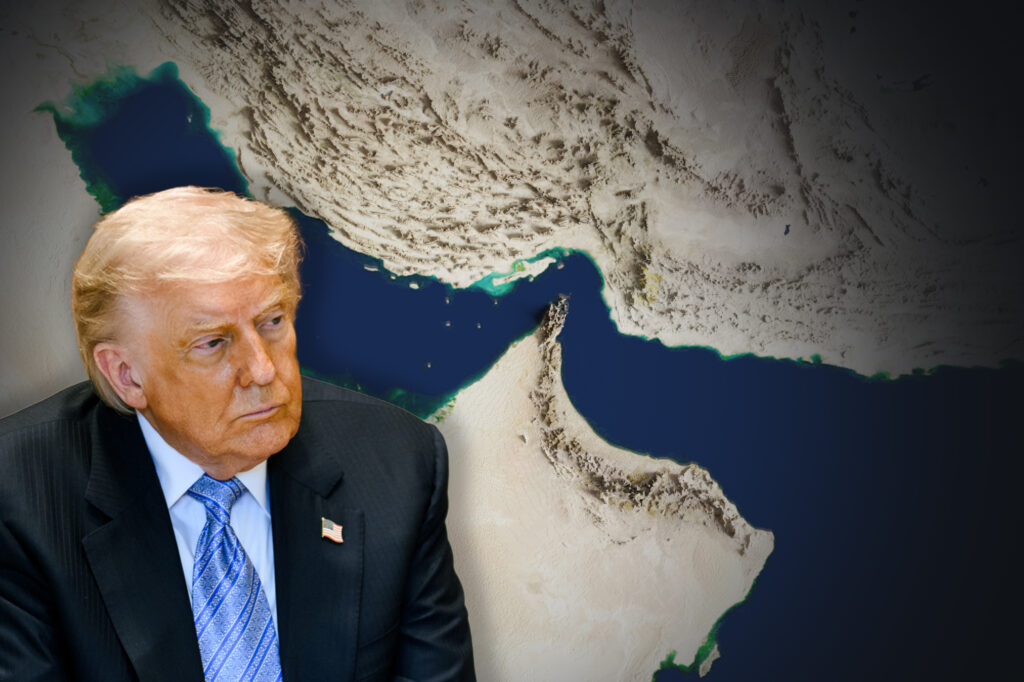
The tentative “memorandum of understanding” with Iran has caused glee on the Left and furor among many on the Right. The Left might welcome “peace,” but surely not as much as it enjoys infighting on the Right over the details.
If last week Democrats were calling Trump a fascist warmonger, now they deride his peace efforts as those of a Neville Chamberlain patsy. Within 24 hours, the Left’s talking points shifted from a mad bomber-style Curtis LeMay in the White House to an impotent appeaser.
A week ago, some Republicans were arguing that not one of the prior seven presidents had dared to use force to stop Iran’s nuclear program. Now some of them are deriding him as an Iranian enabler.
What We Are Missing
There are legitimate concerns about the tentative memorandum, including the idea of third-party cash infusions to the regime and claims that violence in Lebanon is somehow Israel’s fault. In truth, history shows that Hezbollah, with Iranian financial support, consistently instigates the killing and then whines when Israel—or the U.S. in past conflicts—responds disproportionately.
That said, much of the current hysteria assumes a radical change in Trump’s strategy rather than a continuity that has brought us to the current denouement. It also does not consider the wider strategic context of the memorandum, the critical role of domestic public opinion in shaping how wars are conducted, or the broader strategy of isolating and weakening the regime.
A closer look at the current position of the U.S. suggests it has done an enormous amount of fiscal, economic, and military damage to Iran—the full extent of which will not be known until foreigners are allowed into the country.
So why did Trump agree to a memorandum that does not treat Iran as a strategically defeated opponent without options?
Do We Really Want to Micro-Manage Iran?
Iran has been militarily devastated, but it does not yet consider itself strategically inert. The regime has little concern for the welfare of its own people and assumes Trump will not retaliate against dual-use targets in the manner of most past presidents who ordered bombing campaigns.
Remember, Trump could have gotten a much better deal had we dealt with the Iranians as we did with the once-defeated Iraqis and Taliban, whose governments were forcibly replaced by ones more agreeable to U.S. demands.
But, with a population of 93 million, Iran is neither Iraq nor Afghanistan, which together required decades of U.S. ground troops, $2 trillion in treasure, 7,000 American deaths, and 53,000 wounded. And in the end, those efforts still did not result in lasting Western-style governments aligned with U.S. interests.
Neither Afghanistan nor Iraq was as large or as formidable as Iran. To fully dictate terms to Iran as if it were an inert protectorate, the U.S. would either have to bomb it to smithereens or send in thousands of ground troops, both politically unpalatable to the American people. Trump must deal with the realities that Americans have been sick of dealing with the Middle East for years. By now, they believe that any costly, enforced regime change on the ground—or any years-long no-fly zone—is not worth the life of a single American soldier.
The War that Is and Is Not Over
Yet Iran remains militarily defeated if not devastated. Its ability to cause havoc should not be confused with the U.S. ability to inflict even greater damage on Iran’s economy without significant concern about suffering losses in a “forever” war.
If Iran chooses to hit Kuwait with another dozen missiles this week, Trump can adopt the 1999 Bill Clinton-style approach to Serbia—something he has again so far avoided.
When that bombing stalemated in its fifth week, and Slobodan Milosevic remained defiant, Clinton ordered the bridges on the Danube taken out. And when there were still no concessions, NATO planes began dropping graphite bombs to disable 70 percent of the Belgrade grid, which, along with other dual-use targeting, finally forced Serbia to leave Kosovo.
So far Trump has avoided the Clinton–Obama-style bombing of such targets in Serbia and Libya (e.g., Libyan TV/radio stations, industrial works, docks, ports, private homes and compounds, etc.). But should Iran begin to ignore its promises and renege on its agreements (and it will), the regime would have no ability to keep its utilities, roads, and transportation viable if the U.S. were even only to spend 48 hours to knock them all out.
In short, the U.S., by disproportionally hitting an entire array of dual-use targets, can force Iran to adhere to its agreements at any time.
Trump’s Political Viability?
Why, then, did Trump agree to the memorandum instead of a few days of dual-use targeting?
He likely did so thinking he could manage the next four months until the midterms without an energy- and media-driven recession in the U.S. or abroad, which would likely ensure that the Republicans lose the House and perhaps also the Senate. And a Democratic Socialist-driven Congress would paralyze the MAGA agenda, guarantee two years of frenzied House subpoenas, and prompt a nonstop impeachment circus.
However, while 38 of the last 41 midterm elections have seen the in-party lose congressional seats, a Republican loss is not preordained this November.
Republicans will likely win the redistricting wars, both in red state legislatures and through the Supreme Court outlawing racial gerrymandering. They might then pick up between five and ten new seats.
The Democrat Party has gone full socialist. And it has de facto embraced a number of unpopular 30/70 issues including property confiscations, open borders, transgender chauvinism, restoration of DEI, the New Green Deal, and 10,000 illegal border entries a day.
Opening the strait will soon crash the price of oil to prewar levels. And the U.S. economy, despite all the hysterical doom and gloom, ploughs ahead with record stock prices, strong employment figures, record foreign investment, more fossil fuel development, and massive deregulation and tax cuts in progress.
By November, we might even see inflation cooling with far lower gasoline prices and the memory of an active war abroad dissipating.
The Memorandum Is Not the End but the Beginning
The cessation of American bombing and economic strangulation of Iran, if both should follow, would not mark the end but the beginning of a new phase of problems for Iran. Once “peace” arrives, so will the internet of some sort in Iran, and, with that, a horde of Western reporters. And then the world will begin to witness hundreds of billions of dollars’ worth of damage done to the Iranian military-industrial complex.
The already restless people will feel even more contempt for the Revolutionary Guard and theocracy, who talked a grand game, but whose imbecility and weakness caused the wreckage of their country. They will especially resent the regime’s effort to rebuild a half-century, multi-billion military infrastructure while subsidizing nihilist Arab terrorists—all at their expense. Arming the resistance is another tool when Iran breaks its word.
Critics of the preliminary memorandum of understanding, not without merit, argue that the Gulf states will effectively underwrite the rebuilding of Iran’s civilian and military infrastructure. Regrettably, perhaps.
But not so fast. What the Gulf states say now, and what they actually do, are, as we know from the past, two different things. It will not be popular in the Gulf to aid the reconstruction of an Iran that had preemptively bombed Gulf nation airports, hotels, tourist centers, and oil refineries and caused them billions of dollars in damage.
Time Is Not On Iran’s Side
Iran thinks time is on its side, as Trump—at least for now—faces high gas prices and the midterms. In truth, time and dragging out negotiations are not in Iran’s interest, given the midterms are not a sure Democratic bet, and the price of gas is already falling in the U.S.
Even if it behaves for the next four months as the memorandum of understanding morphs into armistice negotiations, sooner or later the Iranian regime will revert to its innately terrorist nature and begin violating its agreements. And then Trump can hit Iran hard but not to the point of crashing oil prices or restarting the war.
And once the midterms are over, and oil prices return to—or fall below—prewar levels, Trump will be unbound to force Iran to comply with new demands or let it wail and gnash its teeth among the rubble of its own ruin.
The World of Oil is Changing
Even more worrisome to Iran is the current mad scramble of the Gulf states to build new or to expand existing pipelines to the Red Sea, the Mediterranean Sea, and the Arabian Sea—thereby neutering the strategic importance of the Strait of Hormuz altogether.
Indeed, in a year or two, Iran may find its enemies can far better bottle up Iran’s imports and exports by closing the strait than Iran can do anything to interrupt the oil exports of the Gulf producers.
If Iran increases oil production, alongside Russia and expanded output in the United States and Venezuela, prices would likely drop—perhaps precipitously—and that would hit the economies of illiberal regimes in Moscow and Tehran far more than that of the United States.
Geo-Strategy Does Not Favor Iran or Its Former Allies
Despite recent U.S. verbal, performance-art remonstrations against Israel, the Gulf and Israel will both see their interests increasingly aligned; for all the demonization of Israel, it poses no threat to the Gulf or moderate Arab nations. After all, in the past it has taken out two nuclear reactors in an unstable Iraq and Syria, demolished Hamas, intimidated the Houthis, and done more damage to Hezbollah than any other Western nation—all, ironically, to the profit and interest of the Gulf nations and the United States.
Europe may despise Trump. But his antics have prompted it to spend more money on defense, more rapidly, than at any time in NATO’s history. And within a year, a bleeding Russia will have limited ability to threaten European NATO nations. Most are turning rightward and, despite denials, are trending toward the Trump model of increasing fossil fuel production, rearmament, tighter borders, deportations of criminal aliens, and a crackdown on crime.
Meanwhile, Russia is losing or stalemated in Ukraine. China can no longer buy cheap sanctioned oil. For all the talk of its rise, Beijing now imports over 10 million barrels of oil per day and 30 percent of its food.
China’s technological position depends on espionage and on sending the West half a million Chinese students each year—at a time when illegal and legal immigration, along with student visas and green cards, are all under scrutiny in Europe and the U.S.
Lies About the Past
Two other unhinged left-wing talking points claim that Iran is better off now than it was when it was never bombed during the 2015 Obama “Iran Deal” and that only Trump ensured the closure of the strait, which was open before his war.
Sen. Elizabeth Warren has been repeating both absurdities.
Warren should ask the late supreme leader and some 80 of his theocratic terrorist cronies whether they would have preferred the ascendant Obama years a decade ago to their current domain in a fiery inferno.
Are we to believe the lunacy that the Iranian air force, air defenses, navy, and missile arsenal were actually in bad shape during the Obama and Biden years because of American sophistry and rhetoric, and that now, after 40 days of bombing, they are in their greatest form ever?
The strait was closed for a few weeks because Iran lost most of its military and had its nuclear program buried under a flurry of bombs. It remained mostly open under prior presidents, who repeatedly warned Iran to stop work on a bomb and then failed to back up their threats.
This year, beleaguered Iran was desperate to shut down the strait as Tehran saw its military and economy in shatters and its nuclear ambitions buried under rubble. Prewar Iran was content to keep the strait open while the regime spread terror and fear throughout the Middle East and beyond without fear of consequences.
In sum, the memorandum and what follows are not the end of the story but merely the beginning. What will follow—years of costly Iranian reconstruction, the absence of a nuclear deterrent, the ability of the U.S. to strike at will, an increasingly sidelined Strait of Hormuz, the Israeli diminishment of its proxies, new anti-Iranian alliances, the loss of nuclear patrons, and an even angrier and more restive populace—will not require an Iraq- or Afghanistan-like intervention.
As the Iranians digest all this, they will stop bragging about the memorandum and increasingly try to lie, finagle, and escape their doom loop—efforts that will only ensure further fragmentation and destruction of the regime.