
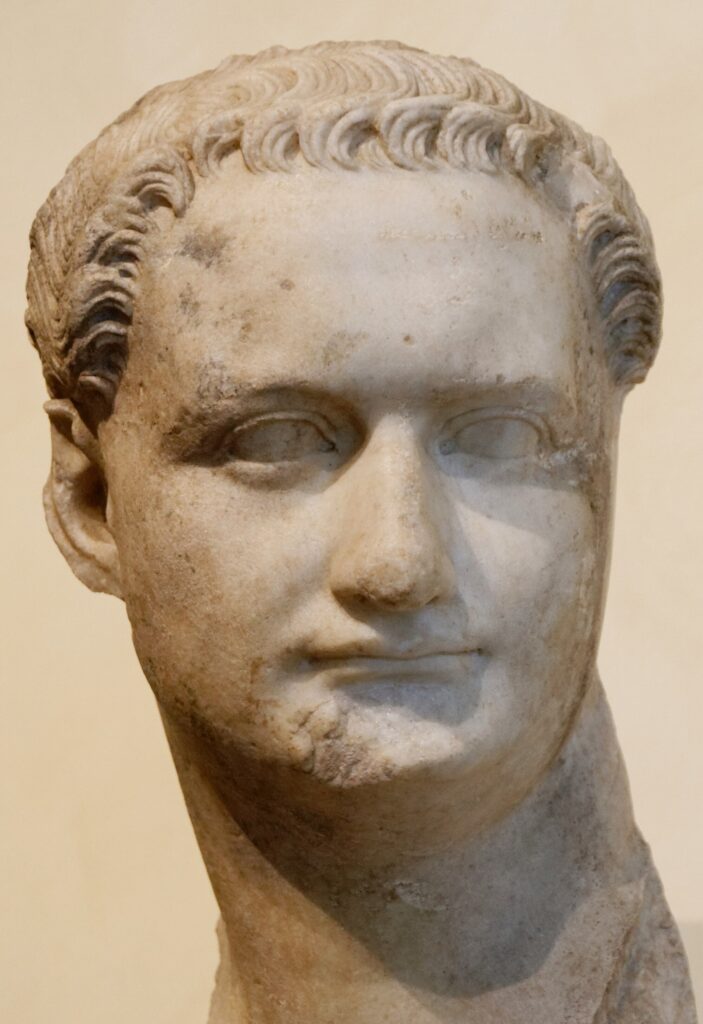
Victor Davis Hanson
The formal end of the Roman Republic in 27 BC came when the Roman Senate acclaimed the 37-year-old final survivor and winner Octavian as “Augustus.”
He alone had won out after 22 years of deadly civil war (from the 49 BC crossing of the Rubicon by Julius Caesar to the final defeat of Antony and Cleopatra at the battle of Actium in 31 BC).
Augustus would rule uninterruptedly for the next 41 years, as “first citizen” (Princeps), but in fact with ultimate executive, legislative, and judicial powers.
We would today call him a sort of benevolent dictator, perhaps like Singapore’s Lee Kuan Yew who ruled outright for 31 years (1959–90), and then indirectly by influence for another 20 years as “senior minister” and “minister mentor” (from 1991–2011).
Lee Kuan Yew is mostly given credit for guiding Singapore’s peaceful independence from Britain and turning the Malaysian city-state into a calm, secure, and economically robust autonomous and autocratic nation-state in a fashion not true of the violent Asian nations surrounding him.
What followed from the death of Augustus in AD 14 was a tumulus period of what the later biographer Suetonius called “The 12 Caesars.” His biographies started earlier with the life of Julius Caesar (100–44 BC), followed by those of the successive emperors Augustus, Tiberius, Caligula, Claudius, Nero, Galba, Otho, Vitellius, Vespasian, Titus, and Domitian.
In other words, Rome witnessed 22 bloody years of Roman Civil war, as the first triumvirate of usurpers (Julius Ceasar, Crassus, and Pompey), who all died violently, was replaced in time by the second tripartite bunch of insurrectionists (Octavian, Mark Antony, and Lepidus)—leading finally to the 41 years of Augustus’s rule (or even longer if one counts his de facto regime beginning earlier with the final victory at Actium), which were more or less tranquil.
Upon the death of Augustus, his 10 successive emperors (chosen either by blood or marriage ties, or by violence) of the so-called Julio-Claudian-Flavian era, ruled for over 82 years, principates marked by on-and-off violent fights over imperial succession, in which a few good or at least so-so emperors—Claudius, Vespasian, and Titus—were overshadowed by some veritable monsters like Caligula, Nero, and Domitian.
By AD 96 with the death of Domitian, the empire was more or less finalized and would endure in the West for nearly 400 years, and in the East for over 1,350 years as the Byzantine Empire.
Following the death of the violent and mostly hated Domitian, Edward Gibbon called the ensuing era of the next five dynasts (96–180) as the time of “The Five Good Emperors,” known commonly as The Nerva-Antonine dynasty of Nerva, Trajan, Hadrian, Antoninus Pius, and Marcus Aurelius.
Gibbon indeed wrote that if “a man were called to fix the period in the history of the world, during which the condition of the human race was most happy and prosperous, he would, without hesitation, name that which elapsed from the death of Domitian to the accession of Commodus.”

Discussion (1)
Join the conversation. Logged in subscribers avoid the Captcha verification and get priority commenting approvals. No vulgarity, links, or code allowed.
Sincere question: I always wondered, why have historians—and politicians—seemingly only waxed nostalgic for the Roman Empire and rent their clothing over its collapse, with no such sympathy offered to the collapse of the Roman republic? Was the republic unworthy, or is it because the word “empire” is used as a shorthand to describe the Roman civilization in general? Or maybe it tells us something about the psychology of the European ruling class? How much of the republic’s strategy for governance was preserved into the empire?